Why We Built the Skill Stick | People's Lacrosse
How People's Lacrosse designed a practice stick around lightweight balls and the idea of practicing where you live.
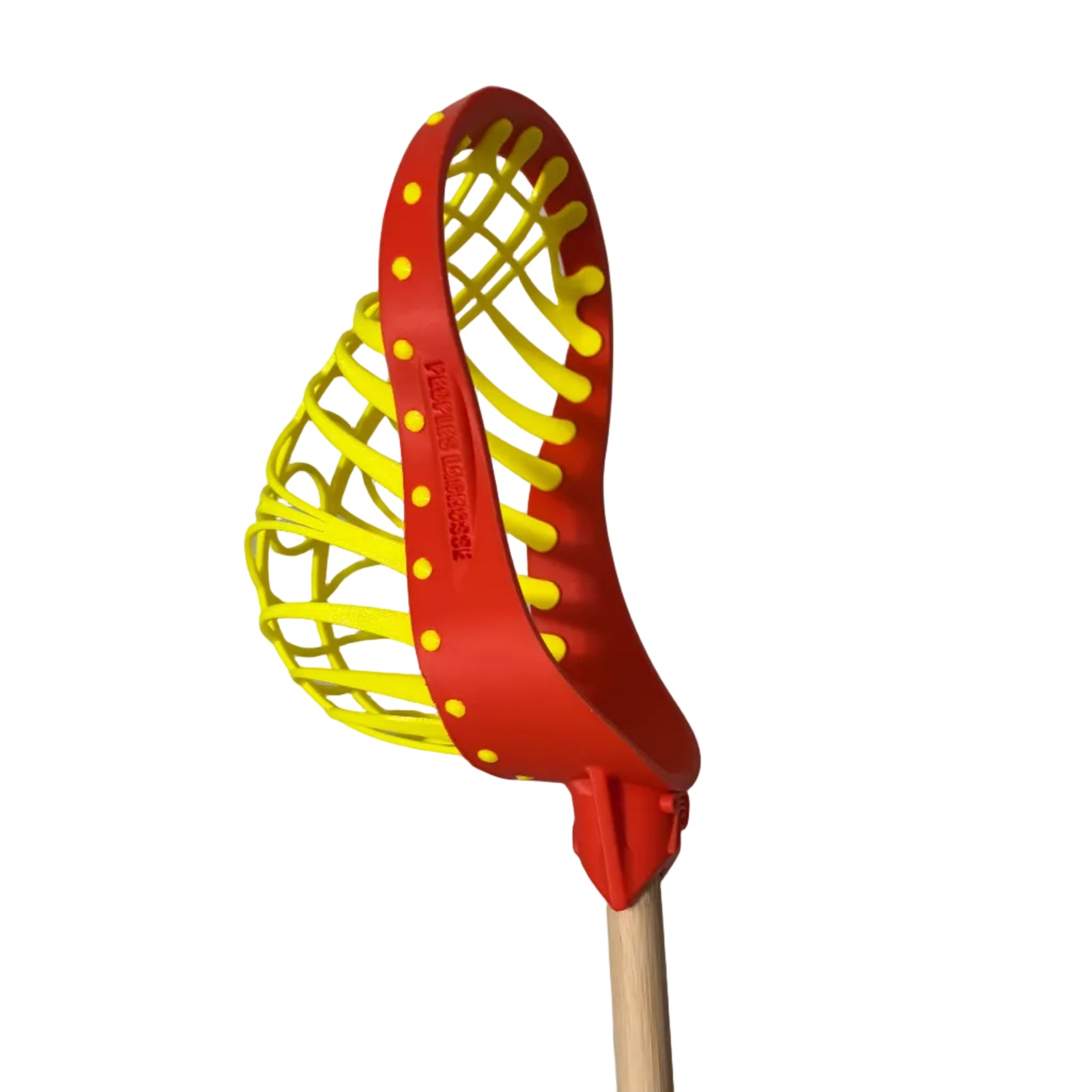
I played MCLA lacrosse in college. Like most serious players, I spent countless hours trying to get better — running drills, working on my shot, building soft hands with wall ball. But there was always a problem: where do you practice when you don't have access to a field or a big backyard?
The answer, for me and a lot of other players, was: wherever you can. The backyard. The driveway. The side of the house. The garage. Sometimes even the hotel room on road trips. But practicing in these spaces with a regulation lacrosse stick and a regulation lacrosse ball creates a whole new set of problems.
The Problem: Broken Windows
A regulation lacrosse ball can cause injury or property damage. Practicing near windows, cars, or siding made me think carefully about where a missed throw could go.
I wanted to practice with lightweight options: tennis balls, wiffle balls, and foam balls. They do not eliminate risk. I still need an appropriate target, enough clear space, and a plan for missed throws.
The next design question was how to build a stick around those balls. Ball fit depends on the ball, head, and pocket together; I wanted to explore that combination myself.
The Existing Solutions: Fiddle Sticks and Mini Sticks
I looked at fiddle sticks and mini sticks while thinking about what I wanted to make. That exploration helped clarify my own goal: a practice stick designed for lightweight balls.
This is my design story, not a claim that every other stick has the same limitations. Other models have their own intended uses and instructions.
I decided to explore my own design rather than make a blanket comparison with other products.
The Solution: A Stick Designed for Lightweight Balls
I designed the Skill Stick around the way I wanted to practice. The Skill Stick solves the ball problem: it is built for lightweight tennis, wiffle, and foam balls, not regulation-ball games.
Start with the ball. The head and pocket are parts of the same design problem. A particular ball's size and behavior matter, so I do not treat every ball in a category as identical.
Keep the practice goal in view. I wanted something small and light enough to handle in the space available, while still allowing me to work on throwing and catching.
For the current design, included parts, options, and compatibility guidance, see the store. This origin story is not a live catalog.
The Philosophy: Practice Where You Live
Underlying all of these design decisions is a simple philosophy: you should be able to practice lacrosse wherever you live.
If you live in a house with a small backyard, you should have a lower-impact way to practice around windows and siding. If you live in an apartment with a garage, foam balls can make practice more practical when paired with an appropriate target and space. If you're traveling, the same lightweight-ball setup can help you keep your hands active.
I designed the Skill Stick to make lightweight-ball practice more approachable. That goal does not replace coaching, appropriate equipment, or choosing a suitable place to practice.
Democratizing the Game
There's a bigger vision here, too. Equipment, access to space, and opportunities to learn can all be barriers to getting started. I want to make it easier for more people to find a way into lacrosse.
The Skill Stick is one part of that work. The Guides, Playbook, and Arcade Lacrosse are other ways to explore the game. Each has its own role; the store is where current products, pricing, and availability belong.
That's the mission: democratize lacrosse. Make it easier for anyone, anywhere, to play. Remove the barriers. Lower the cost. Make it fun.
Try It Yourself
If you're considering practice with lightweight balls, check the current store information and decide whether the equipment fits your space and intended use.
Ready to train with backyard-friendly balls? Visit the current store
Want to explore practice topics? Visit the Guides and follow their references for further instruction.